Our bodies are complex energy systems, and in the yogic tradition, this energy flows through seven main chakras, or energy centers. These chakras, visualized as spinning wheels of light, are located along the spine from the base to the crown of the head. When these chakras are balanced, energy flows freely, promoting physical, emotional, and spiritual well-being. Conversely, blockages or imbalances can manifest as physical ailments, emotional distress, and a general sense of being “off.”
Yoga offers a powerful way to address these imbalances through specific asanas (poses) that target each chakra. By incorporating these postures into your practice, you can unlock your inner harmony and cultivate a deeper connection with yourself.
Let’s explore yoga poses tailored to balance each of the seven main chakras:
1. Muladhara Chakra (Root Chakra): Grounding and Security
Located at the base of the spine, the Muladhara chakra is associated with our sense of security, stability, and survival. When balanced, we feel grounded, safe, and connected to the earth.
Yoga Poses: Grounding poses like Mountain Pose (Tadasana), Warrior I & II (Virabhadrasana I & II), and Garland Pose (Malasana) are excellent for activating the Muladhara chakra.
Mountain Pose (Tadasana): Stand tall with feet firmly planted on the ground. Engage your leg muscles and lengthen your spine, grounding yourself into the earth.
Garland Pose (Malasana): Squat deeply with your feet flat on the floor. Bring your hands together in prayer position at your chest, pressing your elbows against your knees to open your hips. This pose connects you to the earth and stimulates the root chakra.
2. Svadhisthana Chakra (Sacral Chakra): Creativity and Sensuality
Located in the lower abdomen, the Svadhisthana chakra governs our creativity, sensuality, and emotional well-being. When balanced, we embrace our emotions, express ourselves freely, and enjoy healthy relationships.
Yoga Poses: Hip-opening poses like Goddess Pose (Utkata Konasana), Pigeon Pose (Eka Pada Rajakapotasana), and Seated Wide-Angle Forward Bend (Upavistha Konasana) are effective for opening the Svadhisthana chakra.
Goddess Pose (Utkata Konasana): Stand with your feet wide apart, toes turned outward. Bend your knees deeply, aligning them over your ankles. Reach your arms up or bend them at the elbows, forming a “V” shape. This pose builds heat and opens the hips, stimulating the Sacral chakra.
3. Manipura Chakra (Solar Plexus Chakra): Personal Power and Confidence
Located in the upper abdomen, the Manipura chakra is associated with our personal power, self-esteem, and willpower. When balanced, we feel confident, assertive, and in control of our lives.
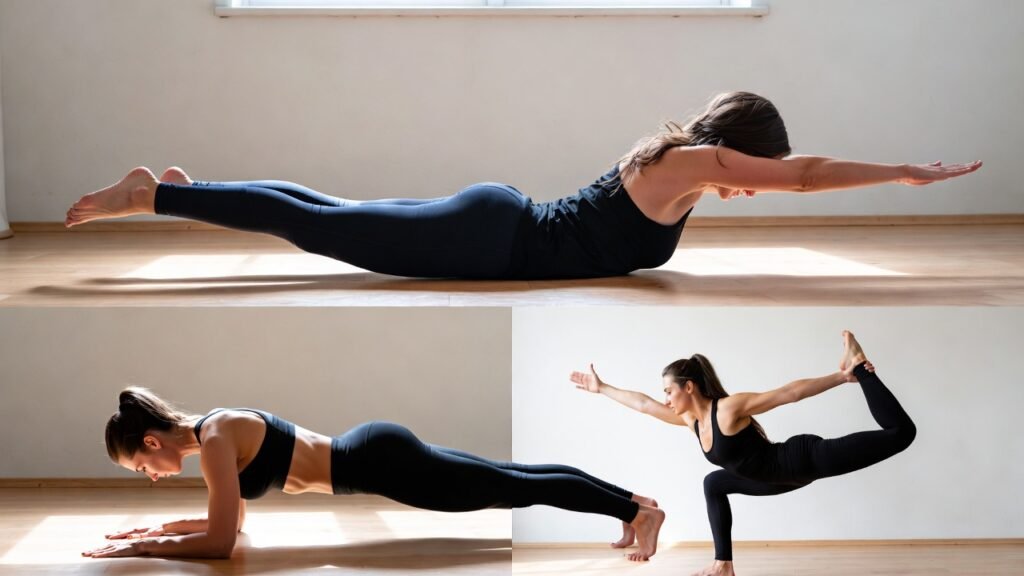
Yoga Poses: Core-strengthening poses like Boat Pose (Navasana), Plank Pose (Phalakasana), and Warrior III (Virabhadrasana III) are ideal for energizing the Manipura chakra.
Boat Pose (Navasana): Sit with your knees bent and feet lifted off the ground. Extend your arms forward, parallel to the ground. Engage your core and maintain a straight spine. This pose strengthens the core and ignites the inner fire of the Solar Plexus chakra.
4. Anahata Chakra (Heart Chakra): Love and Compassion
Located in the center of the chest, the Anahata chakra governs our capacity for love, compassion, and empathy. When balanced, we experience unconditional love, forgiveness, and connection with others.
Yoga Poses: Chest-opening poses like Cobra Pose (Bhujangasana), Camel Pose (Ustrasana), and Wheel Pose (Urdhva Dhanurasana) are beneficial for opening the Anahata chakra.
Cobra Pose (Bhujangasana): Lie on your stomach with your hands under your shoulders. Press into your hands and lift your chest off the ground, keeping your elbows slightly bent. This gentle backbend opens the heart and releases tension.
5. Vishuddha Chakra (Throat Chakra): Communication and Truth
Located in the throat, the Vishuddha chakra is associated with our ability to communicate effectively, express our truth, and listen to our inner voice. When balanced, we speak our truth with clarity and confidence.
Yoga Poses: Neck stretches and poses that stimulate the throat, such as Fish Pose (Matsyasana), Shoulder Stand (Sarvangasana), and Plow Pose (Halasana) can help open the Vishuddha chakra.
Fish Pose (Matsyasana): Lie on your back with your legs extended. Place your hands underneath your buttocks, palms facing down. Press into your elbows and lift your chest, dropping your head back gently. This pose opens the throat and stimulates the thyroid gland.
6. Ajna Chakra (Third Eye Chakra): Intuition and Insight
Located between the eyebrows, the Ajna chakra is associated with our intuition, insight, and wisdom. When balanced, we trust our intuition, see the bigger picture, and connect with our higher selves.
Yoga Poses: Forward folds like Child’s Pose (Balasana), Wide-Legged Forward Fold (Prasarita Padottanasana), and Supported Headstand (Salamba Sirsasana) can help calm the mind and stimulate the Ajna chakra.
Child’s Pose (Balasana): Kneel on the floor with your big toes touching. Sit back on your heels and fold forward, resting your forehead on the ground. Extend your arms forward or alongside your body. This pose calms the mind and encourages introspection.
7. Sahasrara Chakra (Crown Chakra): Spirituality and Connection
Located at the crown of the head, the Sahasrara chakra is associated with our spirituality, connection to the divine, and sense of oneness with the universe. When balanced, we experience a deep sense of peace, joy, and enlightenment.
Yoga Poses: Meditative poses like Lotus Pose (Padmasana), Corpse Pose (Savasana), and Tree Pose (Vrksasana) can help us connect with the Sahasrara chakra.
Corpse Pose (Savasana): Lie on your back with your arms at your sides, palms facing up. Relax your entire body and allow your mind to quiet. This pose promotes deep relaxation and allows for integration of the energy flow throughout the chakras.
By incorporating these yoga poses into your practice, you can begin to balance your chakras and experience a greater sense of well-being on all levels. Remember to listen to your body, modify poses as needed, and consult with a qualified yoga instructor for guidance.