Why the Cards Feel So Accurate (And How to Read Them Yourself)
There is a moment in every powerful tarot reading when the world goes quiet.
You turn over a card, and somehow it knows. It knows the question you didn’t fully say out loud. It knows the crossroads you’re standing at. It knows the truth you’ve been circling but haven’t quite admitted yet.
That is the pure magic of a tarot reading.
Not because the cards control your future. But because they reflect it, and you, with startling clarity.
For centuries, tarot reading has helped people navigate love, career decisions, personal transformation, and those strange in-between seasons of life where nothing feels stable. Today, you can still experience that same depth whether you shuffle a physical deck at your table or explore an online Tarot Reading designed with structured spreads and detailed interpretations.
A Brief History of Tarot Reading
Tarot cards first appeared in 15th-century Europe as playing cards. Beautifully illustrated, richly symbolic, they were admired for their artistry long before they were used for insight.
Over time, people began to see something deeper in the imagery. The Fool stepping into the unknown. The Lovers choosing between paths. The Tower collapsing what can no longer stand. These were not just pictures — they were mirrors of human experience.
By the early 1900s, illustrated decks made tarot reading far more intuitive. Every card became a story scene. That symbolic structure still shapes modern tarot today.
What Happens During a Tarot Reading?
A tarot reading brings structure to uncertainty.
You bring the question. The cards provide the framework.
A full tarot deck contains 78 cards. Twenty-two Major Arcana cards speak to life-changing themes and spiritual turning points. The remaining fifty-six Minor Arcana cards reflect everyday emotions, challenges, and opportunities.
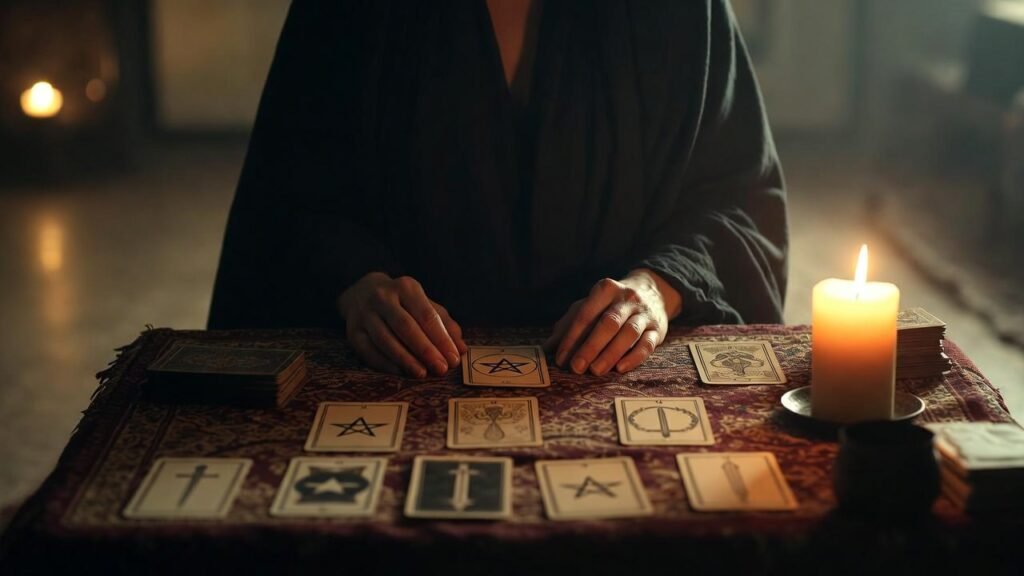
When you do a tarot reading, you shuffle while focusing on a clear question. You lay the cards into positions, each one representing something specific: your present situation, your obstacle, hidden influences, likely outcomes.
And suddenly, what felt confusing starts to feel organized.
If you want to understand the deeper symbolism behind each card while doing your own reading, you can read this list of tarot card meanings or simply search for the intreptation as you go. Your library should also have lots of books that contain the meanings of each and every card.
Why Tarot Reading Feels Almost Uncomfortably Accurate
When a tarot reading hits, it hits.
It’s not random. Tarot works because it taps into archetypes, universal patterns that show up in every human life. The imagery activates your subconscious. It helps you see what you were already sensing.
A card about conflict makes you immediately aware of tension you’ve been managing. A card about opportunity highlights a path you’ve been afraid to take. A card about endings reminds you that something has already run its course.
A tarot reading doesn’t insert new ideas.
It reveals what’s already forming beneath the surface.
How to Do a Tarot Reading for Yourself
You do not need to be psychic to do a tarot reading, nor do you have to pay a lot of money.
All you need is honesty, curiosity, and a willingness to listen.
Start simple. Find a quiet space. Ask a clear question: not “Will everything be okay?”, but “What do I need to understand about this situation?”
Shuffle slowly while focusing on your question. Then pull three cards.
A quick Three-Card Tarot Reading That Builds Confidence
Card One: The Past.
Card Two: The Present.
Card Three: The Likely Outcome.
Lay them from left to right.
Don’t rush to definitions. Look at the imagery. Is there movement? Stillness? Conflict? Harmony?
A tarot reading is a story unfolding across the cards. Notice repetition. Notice emotional tone. Notice what feels obvious — and what feels uncomfortable.
There are many spreads you can try, from simple 1 card “Yes / No” readings to detailed 6 card universal spreads.
Reversed Cards and Deeper Layers
When a card appears upside down, it doesn’t mean disaster.
Reversed cards often suggest internal energy, something blocked, delayed, resisted, or not yet fully integrated. They add nuance. They soften or intensify the message.
The more layers you add, the more dimensional your tarot reading becomes.
The Celtic Cross Tarot Reading
When you want the full story, try the Celtic Cross.
Ten cards. Multiple angles. Present influences, subconscious drivers, external forces, hopes, fears, and possible outcomes woven together.
This style of tarot reading feels less like a snapshot and more like a psychological map.
Trying a structured Tarot reading using the Celtic Cross layout can show you how each position builds on the next, revealing patterns you may not see in a smaller spread.
Tarot Reading Is About Momentum, Not Fate
This is the most important thing to understand.
A tarot reading does not trap you in a fixed future.
It shows direction. It shows momentum. It shows what happens if nothing changes.
And once you see that momentum clearly, you can shift it.
That is why people return to tarot reading again and again — not for prediction, but for clarity.
Why Tarot Continues to Captivate Millions
Because it feels honest.
Because it bypasses denial.
Because sometimes you need a symbolic mirror to show you what your logical mind keeps debating.
If you’re curious, begin. Pull one card tomorrow morning. Study the symbolism. Or experience a full tarot reading at Trusted Tarot and see which of the readings resonates with you most.
Pay attention to that quiet recognition when the cards land and something inside you says, “Yes. That’s exactly it.”
That moment is why tarot reading has endured for centuries — and why it continues to feel alive today.