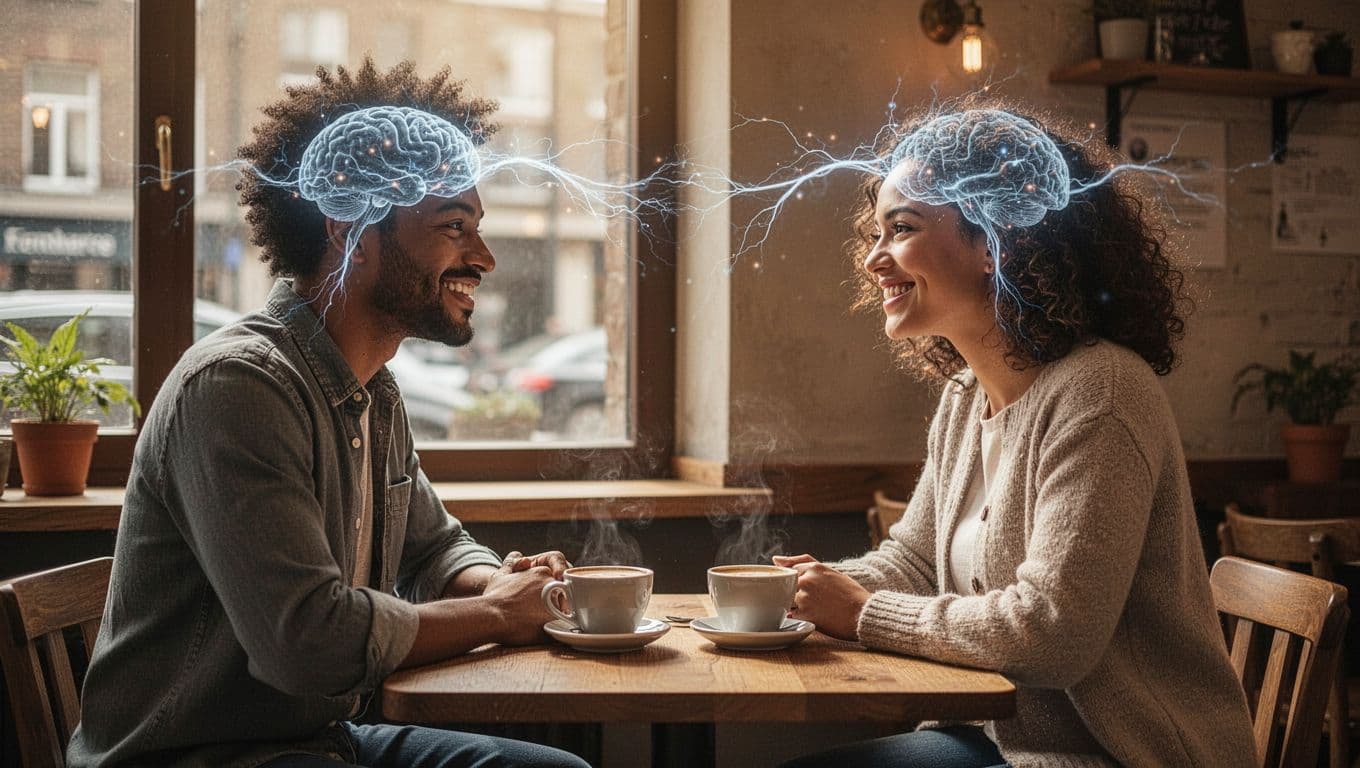
You meet someone for the first time, and the room seems to soften. Your shoulders drop. The talk flows without strain. Ten minutes pass, yet it feels like you’ve stepped into the middle of a friendship already in progress.
That feeling can be hard to explain because it lands in the body before it reaches words. People often call it chemistry, fate, or recognition. Others call it an instant connection. Whatever name you give it, the feeling is real.
Science and spirituality offer two different lenses for this moment. One looks at how the brain reads safety, familiarity, and rhythm. The other gives meaning to the eerie sense that you’ve met before. Both can help, and neither has to cancel the other out.
What an instant connection really feels like, and why it stands out
An instant connection is more than a good first impression. It often feels like emotional ease arriving ahead of logic. Conversation moves without effort. You don’t perform. You don’t search for lines. Shared humor appears fast, and silence doesn’t feel awkward.
It can happen in romance, friendship, mentorship, or a brief encounter with someone you’ll never see again. A stranger at a wedding, a seatmate on a train, a new boss, a neighbor in line for coffee, all can spark that strange sense of home.
Time can feel odd in these moments. Sometimes it speeds up because you’re absorbed. Sometimes it slows because you’re unusually present. That contrast is part of why the memory sticks.
The signs people often notice right away
Most people describe the same small clues. Eye contact feels natural, not forced. Your body loosens. The other person seems easy to read. You both lean in, laugh at the same places, and pick up each other’s pace without trying.
There’s often a quick sense of safety. You may share things sooner than usual, not because you’re careless, but because the exchange feels steady. Some people say, “I feel like I’ve known you forever.” That phrase comes up so often because it fits the mix of warmth, calm, and surprise.
The body often relaxes before the mind knows why.
Why a powerful first click is not always destiny
A strong first bond matters, but it doesn’t always predict long-term fit. Real connection and lasting compatibility are related, not identical.
Sometimes intensity comes from projection. A face, voice, or manner may echo someone you already trust. At other times, unmet needs shape the glow. If you’re lonely, grief-struck, or hungry to be seen, a kind stranger can feel larger than life.
So the feeling deserves respect, but it also needs time. Chemistry may open the door. Character decides whether the room is safe to stay in.
What science says about why some people just click
Science can’t confirm that strangers are “old souls.” As of April 2026, no new study has pinned instant connection on one clear brain mechanism. Still, recent research gives useful clues about what happens in brief, meaningful encounters.
Work highlighted by Gillian Sandstrom and others shows that small talks with strangers often improve mood more than people expect. Field studies with commuters found that chatting with a stranger beat sitting in silence. Other research on “micro-moments” of connection links warm exchanges with more trust, belonging, and openness. Even a single online conversation with a stranger during the pandemic raised general trust in others.
Those findings matter because they show the social system is built to respond fast. A brief exchange can change how safe, seen, and connected you feel.
Your brain spots familiarity before your mind catches up
The brain is a pattern reader. It scans tone, facial expression, timing, posture, and even humor style in seconds. If several signals match what you’ve known as safe before, your system may settle quickly.
That familiarity doesn’t mean the person is familiar in any mystical sense. A soft voice might remind you of a trusted aunt. A crooked smile might echo an old friend. Similar values can show up in tiny ways, such as how someone listens, jokes, or reacts to discomfort.
Some researchers use the term neural homophily for a related idea: people with similar interests or outlooks can process the world in similar ways. That doesn’t prove soul recognition. It does suggest that “we click” may reflect a real alignment in attention and interpretation.
Even deja vu can play a part. Sometimes the brain tags a new moment as strangely known because some detail overlaps with an old memory. That mental glitch can feel eerie, but it isn’t proof of fate.
There’s also an old survival logic beneath all this. Humans had to read strangers fast. A calm face, steady voice, and open posture could hint at a safe ally. A hard stare or jagged tone could warn of risk. That quick sorting still shapes modern meetings.
Mirroring, brain sync, and the comfort of being understood
When two people connect, they often start to mirror each other in small ways. One smiles, the other smiles back. One leans forward, the other follows. Their speaking rhythm starts to match. This kind of mirroring can make a conversation feel smooth and safe.
The mirror-neuron idea helps explain part of that. When you watch someone act or emote, parts of your own system may echo what you see. You don’t become them, but you begin to track them from the inside. That inner echo can build empathy fast.
Researchers also talk about brain-to-brain coupling, which means two people can begin to sync in attention and timing during a shared exchange. In plain terms, both minds lock onto the same moment. You notice the same joke, the same pause, the same shift in feeling. That shared rhythm often feels like being understood without much effort.
Add quick trust cues to the mix, and the effect grows. A warm tone, stable eye contact, matched humor, and responsive listening can tell your nervous system, “You can stay open here.” That message may be why a stranger can feel known within minutes.
Why spirituality gives this feeling a different kind of meaning
Science can describe signals and patterns. Spirituality speaks to the meaning people feel inside the experience. For many, that matters just as much.
When a meeting feels larger than logic, people often reach for spiritual language. They talk about soul recognition, past-life ties, karmic bonds, soul contracts, or twin flames. These ideas aren’t scientific proof, but they give shape to a feeling that seems to arrive from somewhere older than memory.
Soul recognition, past lives, and the sense of meeting again
The idea of soul recognition is simple and comforting. It says some people feel familiar because, on some level, they are. Maybe you knew each other before this life. Maybe your paths were meant to cross now for healing, growth, or love.
You don’t have to fully believe in past lives to understand the pull of that story. It mirrors the lived feeling. A person walks in, and something in you says, “Oh, you.” That reaction can feel tender, ancient, and oddly calm.
Karmic connection adds another layer. In that view, certain people arrive to help settle old lessons. Soul contracts suggest that some meetings are part of a deeper plan. Twin flame language goes further and frames the bond as rare, intense, and transformative. Many people find these ideas comforting because they honor the emotional size of the moment.
When spiritual labels help, and when they can blur the truth
Spiritual labels can help when they invite reflection. They can turn a strange meeting into a chance to ask better questions. Why did this person feel so familiar? What part of me woke up around them? What need, grief, or hope did they touch?
Still, labels can also cloud judgment. If you call every intense bond “karmic” or “twin flame,” you may excuse confusion, poor boundaries, or repeated hurt. A strong pull doesn’t erase red flags. Mystery doesn’t make someone honest, kind, or emotionally available.
The best use of spiritual language is gentle, not blinding. It can hold meaning without replacing common sense.
How to honor the connection without losing your footing
When you meet someone who feels strangely known, you don’t need to shut the feeling down. You also don’t need to build a myth around it by day two. The middle path is better. Stay open, stay curious, and keep your feet on the ground.
Let the bond unfold, but pay attention to patterns
A real connection gets clearer with time. The first glow matters less than what follows it.
A few checks help:
Notice how you feel after seeing them. Calm, clear, and steady is different from anxious, spun up, or confused.
Watch whether words and actions match. Warm talk is easy. Consistency is the harder test.
See if the bond allows honesty and boundaries. Good connection makes room for “no,” for pace, and for your full self.
If the link is healthy, you usually feel more like yourself, not less. There may be excitement, but there is also air in the room.
What this kind of meeting might be teaching you
Sometimes the person is meant to stay. Sometimes they’re a brief mirror. Either way, the meeting can teach you something true.
It may show you that you’re ready for a deeper bond than the ones you’ve accepted before. It may reveal an old wound that still reaches for instant safety. It may remind you what emotional ease feels like, and that matters.
Some strangers feel like old souls because they wake up a form of recognition in you. That recognition may point to shared values, a familiar nervous-system response, or a story your spirit finds meaningful. The lesson can remain, even if the person doesn’t.
Science explains why fast familiarity can happen. Spirituality helps many people name what the moment means. Put together, they offer a grounded kind of wonder.
That stranger who felt like home may have matched old patterns in your brain, or touched a symbol your soul understands. Either way, the wisest response is the same: honor the feeling, watch the pattern, and keep your balance. The mystery is real, and so is your judgment.
instant connection, old souls, soul recognition, brain sync, stranger chemistry