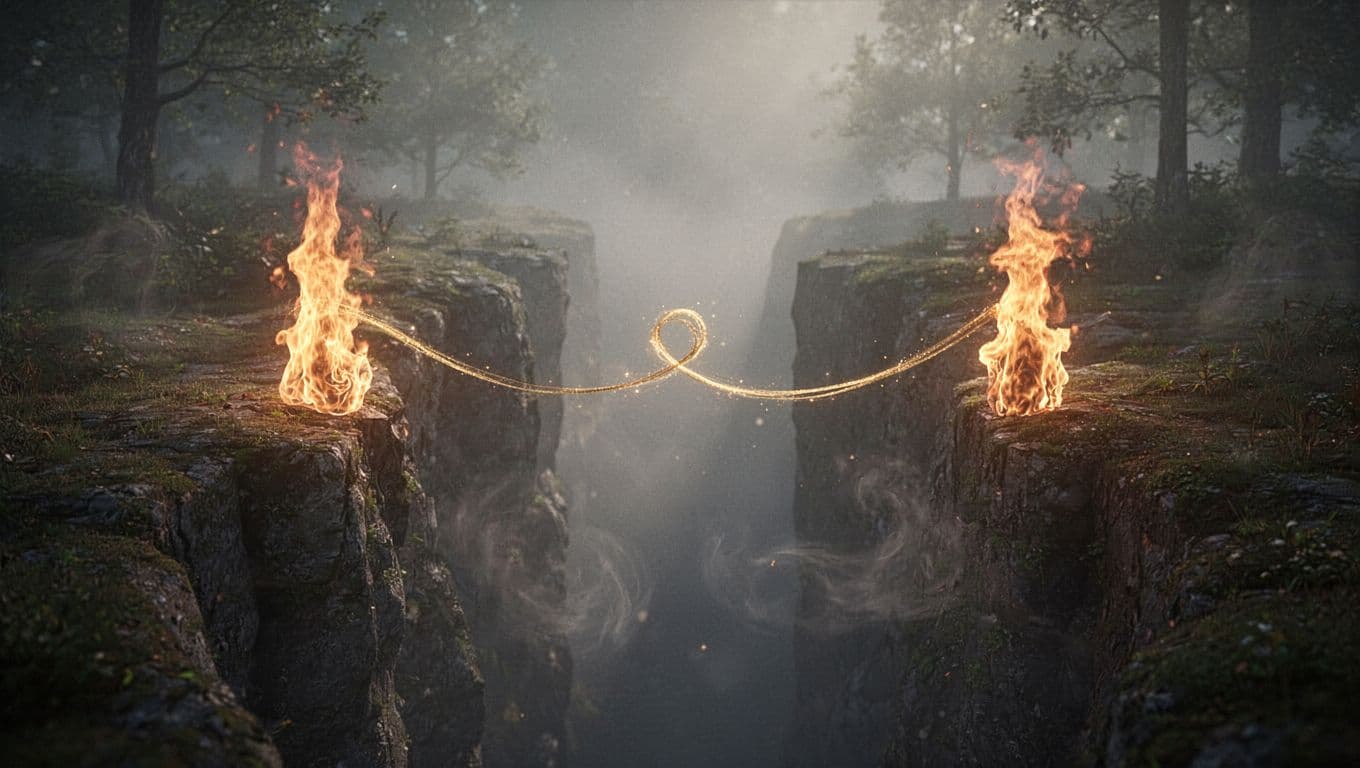
When a twin flame connection breaks apart, the pain can feel sharp, strange, and bigger than the facts in front of you. You may know you’re apart, yet some part of you still feels tied to them, as if the story never fully closed.
That is why this experience can feel harder to explain than a normal breakup. For people who believe in twin flames, separation is often seen as a stage of the bond, not proof that it was fake, failed, or finished. The hard part is living through it without losing your footing.
To understand the twin flame separation meaning, it helps to step back from panic and look at what this phase is believed to do, why it starts, and how to move through it with more peace.
What twin flame separation really means
Twin flame separation usually refers to a period when two people who share an intense soul-level bond are no longer in harmony. Sometimes they stop speaking. Sometimes they still talk, but the connection feels blocked, tense, or painfully one-sided. In many teachings, this phase is common, not unusual. A basic guide to twin flame separation makes the same point: the split is often framed as part of the path, not the end of it.
How it feels different from a regular breakup
A regular breakup often centers on mismatch, conflict, or life logistics. Twin flame separation feels different because the bond may still feel alive after contact ends. You may replay conversations, feel unfinished business, or wake up with the sense that the other person is somehow still “there.”
That doesn’t prove anything supernatural. It does explain why the grief can feel disorienting. You’re not only mourning a person. You’re mourning a version of yourself that woke up inside the connection.
Physical distance versus energetic distance
Physical separation is simple. You’re apart in daily life. You don’t live together, talk, or see each other.
Energetic separation is harder to name. It means the emotional thread still feels active. You think of them often. Old feelings rise without warning. You may sense them even when you’re trying not to. Many people use spiritual language for this. Others see it as attachment, pattern recognition, or a nervous system response. Either way, the felt bond can continue long after the outer relationship pauses.
Why this stage shows up in many twin flame stories
Most twin flame stories describe the bond as intense enough to stir up buried pain. Because of that, separation is often seen as a pressure-release stage. The connection exposes what is unhealed, and distance creates room to face it.
Why separation happens in the first place
Separation is usually described as growth, not punishment. That matters, because pain often tells you that you’ve been rejected. Twin flame teachings tell a different story: the split happens because the bond has hit material that neither person can carry well yet. Recent 2026 discussions online still circle the same theme, growth matters more than chasing dates or guarantees.
The mirror effect brings hidden wounds to the surface
People often call twin flames mirrors because the connection reflects what you avoid. That might be fear of abandonment, fear of being controlled, shame, jealousy, or a need to be chosen at all costs. When those wounds rise fast, the bond can feel overwhelming.
A lot of people searching “why do twin flames separate” are really asking why love would trigger so much pain. A grounded answer appears in this piece on why twin flames separate: the connection tends to expose old patterns that can no longer stay hidden.
Healing has to happen before union can feel safe
Love is not always enough to make a bond stable. If one or both people are wounded, the connection may swing between closeness and chaos. That is why separation is often said to push both people toward self-work.
In plain terms, reunion is less about fate and more about readiness. If you can’t regulate your emotions, hold boundaries, or feel whole on your own, the relationship may keep reopening the same wound.
Fear, timing, and life circumstances can all play a role
Sometimes one person is scared by the depth of the bond. Sometimes both are. In other cases, outside life gets loud: divorce, family pressure, mental health struggles, money stress, long distance, or different life stages. Some people call this divine timing. Others call it real life. Both views point to the same truth, timing matters.
The runner and chaser dynamic, explained in plain language
The runner and chaser pattern is one of the most talked-about parts of the twin flame separation stage. One person pulls away. The other tries to close the gap. This can repeat for months or years if neither person sees what is driving it. A detailed runner and chaser dynamic explainer describes the same push-pull cycle.
Why the runner pulls back
The runner is usually not heartless. More often, they feel flooded. Intimacy can bring up fear of loss, fear of change, or fear of being fully seen. Some runners shut down because the bond asks for more honesty than they know how to give.
Pulling away can look cruel from the outside. Inside, it is often panic wearing a mask.
Why the chaser keeps reaching out
The chaser usually feels the break as a threat. They may believe one more message, one more talk, or one more sign will fix everything. Contact becomes a way to soothe pain.
That urge makes sense, but it can slide into obsession. If your whole inner life starts orbiting their silence, you’ve handed your center away.
How the cycle can shift when one person stops chasing
When the chasing energy drops, the pattern changes. That doesn’t promise reunion. It does stop feeding the loop.
The point is not to act detached while secretly waiting. The point is to return to yourself. When you stop begging the bond to calm your fear, you can finally hear what the separation is asking you to learn.
What separation is meant to teach you
This is the heart of the experience. Separation is often said to wake up self-love, honesty, emotional strength, and better boundaries. In other words, the lesson is not “wait better.” The lesson is “become more whole.”
Learning to face your shadow instead of avoiding it
Shadow work sounds heavy, but it is simple at its core. It means noticing the parts of you that react hard and fast. For example, do you feel worthless when they go silent? Do you confuse intensity with safety? Do you ignore your own needs to keep a bond alive?
These are not small questions. They show you where your pain lives.
Building a sense of wholeness on your own
Separation can strip away the fantasy that another person will complete you. That hurts, yet it can also save you. You start building calm from the inside, through routine, rest, work, therapy, faith, movement, and honest reflection. That is why articles like MindBodyGreen’s overview of twin flame separation keep returning to self-love and inner healing.
Trusting that pain can lead to growth
Pain is not proof that you’re on the right path. Still, pain can wake you up. Many people come out of separation clearer, steadier, and less willing to abandon themselves for love.
The strongest sign of growth is not constant longing. It is more peace, more self-respect, and less fear of the outcome.
How long twin flame separation usually lasts
No honest person can give you a fixed timeline. Some separations are brief. Others stretch for years. Many never turn into a romantic reunion. That truth can sting, but it is healthier than false hope.
Why timelines can be misleading
Timelines keep you focused on the clock instead of the lesson. They can also keep you emotionally hooked. If every week becomes a hunt for signs, you may delay your own healing.
That is why many 2026 conversations around this topic keep pushing the same advice: stop treating reunion like a deadline.
Signs the separation phase may be shifting
The most useful signs are internal. You feel calmer. You stop checking for proof every hour. Your life starts to feel like your own again. You trust yourself more.
External signs may happen too, like contact or less tension. Still, inner change matters more than any text message. Popular articles on reunion signs also point back to peace and self-trust first.
What usually has to change before reunion feels possible
If reunion happens, it tends to require less fear, better boundaries, more honesty, and less need to control the outcome. Put simply, both people need to feel safer in themselves.
How to get through separation without losing yourself
You do not need to decode every sign to survive this. You need steady habits that bring you back to your own life.
3 things to do right now during separation
Write down what this bond triggers in you.
Cut back on checking their social media for one full week.
Put one neglected part of your life back on the calendar today.
Use shadow work, journaling, or therapy to process what came up
Write without censoring yourself. Track your triggers. Notice what hurts most: rejection, silence, loss of control, or fear that the bond meant nothing. A therapist, especially one familiar with attachment wounds, can help you sort pain from fantasy.
Stop checking, chasing, and decoding every sign
Constant tarot pulls, number watching, and social media checking can keep the wound open. So can repeated “cord-cutting” rituals if you use them to force relief instead of building real detachment. The goal is not to erase the bond. It is to stop feeding the obsession.
Put your energy back into your own life
Return to sleep, food, work, movement, friendships, faith, art, and purpose. If this connection is real, your healing won’t harm it. If it isn’t, your healing will still save you.
That is the part many people miss. Your life cannot stay on pause while you wait for someone else’s readiness.
Conclusion
Separation can feel like a storm that never asked for your consent. Yet within twin flame teachings, it is often seen as a season of growth, not rejection. The pain points to what needs care, not what makes you unlovable.
The deepest meaning of this phase is not reunion at any cost. It is wholeness. When you stop forcing answers, stop chasing proof, and start building a steadier self, the experience changes shape.
If reunion comes, you meet it with clearer eyes. If it doesn’t, you still leave this season more grounded, more awake, and more able to love without losing yourself.