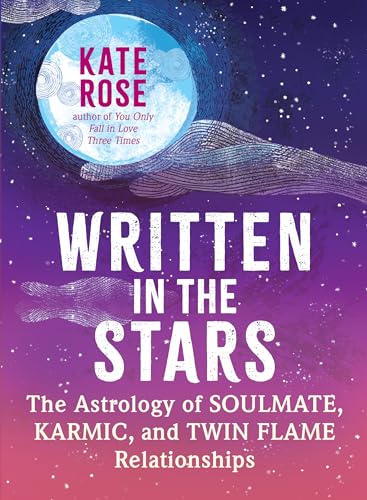
Disclosure: This article contains affiliate links. As an Amazon Associate, Soul Connections Hub earns from qualifying purchases, at no extra cost to you. Learn more.
Three soul contracts can feel equally fated, yet they don’t ask the same thing from you. That’s why so many people confuse a twin flame, a soulmate, and a karmic partner, especially when the connection feels intense from day one.
Most online advice blurs them together. But in common spiritual teachings, they serve different purposes, and that difference matters because it changes how you respond, what you expect, and what you should never excuse.
Twin flames are mirrors, not always life partners
A twin flame is usually described as a soul mirror. In spiritual terms, this bond reflects your wounds, gifts, fears, and unrealized strength back at you. That’s why it can feel electric, uncanny, and almost too familiar.
At first, the pull is hard to ignore. You may feel seen in a way that borders on unsettling. Yet the point of this bond isn’t comfort. It’s growth through reflection, and reflection can sting.
Because of that, twin flame relationships often move in waves. There may be closeness, then distance, then a period of inner work. Many spiritual writers describe separation as part of the process, not proof of failure. Still, that does not mean every painful bond is a twin flame bond.
This is where people get lost. They confuse obsession with destiny. A real mirror connection may shake your life, but over time it should push both people toward honesty, healing, and self-respect. If the bond keeps you in chaos with no change, the label doesn’t make it sacred.
A twin flame, in short, tends to wake you up. It may be romantic, but it’s not always meant to become a stable partnership.
Soulmates feel steady because their job is support
A soulmate is often less dramatic and more grounding. Think of this bond like a deep exhale after holding your breath too long. You feel known, supported, and safe enough to grow without constant upheaval.
Soulmates aren’t limited to romance. A best friend, a mentor, a sibling, or a spouse can all fit this idea. In spiritual traditions, soulmates belong to your soul family, people who help you remember who you are without tearing the house down first.
That doesn’t mean soulmate bonds are effortless. Real closeness still brings conflict, needs, and repair. The difference is the tone. A soulmate connection usually feels nourishing more often than destabilizing. You don’t spend all your time decoding mixed signals.
Also, soulmate love tends to build. It supports your daily life, your values, and your peace. You may feel inspired, more creative, or more open-hearted around this person. Most importantly, the bond doesn’t require you to abandon yourself to keep it.
If twin flames are fire, soulmates are warmth. One exposes what’s raw. The other helps life feel livable.
A karmic partner can look spiritual because it starts with heat. The chemistry may be instant. The pull may feel fated. Yet the deeper pattern is usually repetition, not mutual peace.
In spiritual language, karmic relationships are tied to unfinished lessons. Those lessons often center on boundaries, self-worth, attachment, control, or letting go. So the bond may keep pressing the same bruise until you finally stop calling the pain love.
Unlike soulmate energy, karmic energy often drains. You may feel anxious before seeing them, empty after leaving, or stuck in a loop of breakups and returns. There’s intensity, but not much calm. There’s longing, but not much trust.
That’s the key point nobody says plainly enough: karmic does not mean “meant to be.” It often means “meant to teach.” Once the lesson lands, the bond may end suddenly or lose its grip.
If a relationship keeps asking for your peace as payment, don’t confuse that cost with fate.
Because of that, karmic labels should never excuse manipulation, cruelty, or repeated harm. If the relationship is toxic, safety comes before spiritual meaning.
Twin flame vs. soulmate vs. karmic partner at a glance
As of April 2026, common spiritual interpretations still agree on the broad split between these three relationship types. This quick table makes the difference easier to spot.
Connection
Core purpose
Usual feel
Likely outcome
Twin flame
Deep inner growth and mirroring
Magnetic, intense, exposing
Lasting change, not always lasting romance
Soulmate
Support, harmony, and shared growth
Warm, safe, familiar
Often stable and long-term
Karmic partner
Repeating lessons and pattern-breaking
Addictive, draining, unstable
Often ends after the lesson
The takeaway is simple. Intensity alone proves nothing. A bond’s purpose shows up in its pattern, not in how dramatic the first spark feels.
How to tell what kind of connection you’re in
Start with your nervous system, not the fantasy. After time with this person, do you feel clearer or more confused? More grounded or more hooked? Your body often tells the truth before your mind catches up.
A twin flame bond tends to expose your shadow and force growth. A soulmate bond tends to steady you and make healthy love feel possible. A karmic bond tends to repeat the same lesson until you choose a new response.
Also, watch what the relationship rewards. Does honesty bring closeness, or punishment? Does distance create insight, or panic? Does love deepen your self-respect, or strip it away?
No label should trap you. Spiritual ideas can be helpful, but they’re not a free pass for bad behavior. The healthiest way to read these bonds is with two feet on the ground: notice patterns, name the lesson, and act in your own best interest.
The label matters less than the pattern
Some bonds feel written in the stars. Still, what matters most is what they ask you to become. Soulmate, twin flame, and karmic partner are not the same road, even when the first step feels equally charged.
Look at the pattern, not the poetry. If the bond grows your peace, truth, and self-respect, it’s helping. If it keeps eating those things, the lesson may be to walk away.