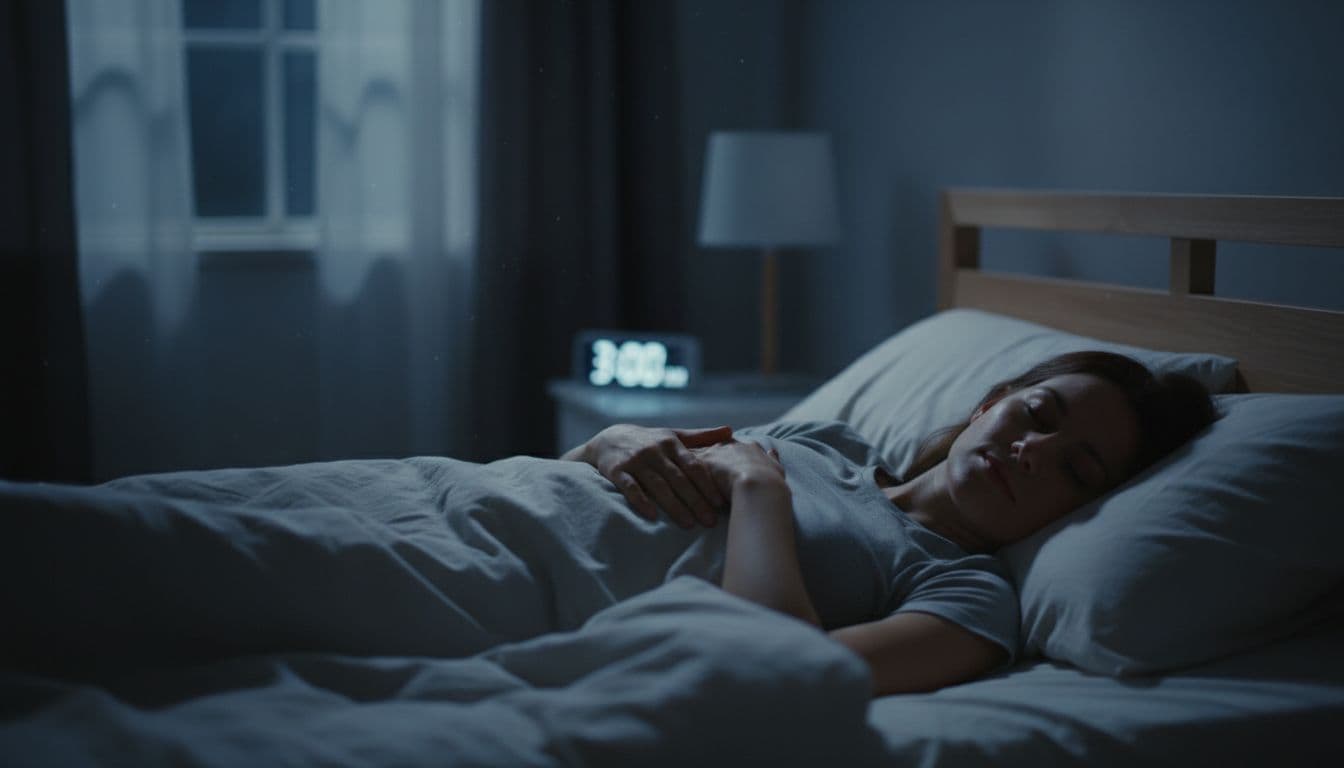
You open your eyes to a dark room. The house is silent. The clock reads 3:07, again. After a few nights, it starts to feel eerie, as if your body has set an alarm you never asked for.
The good news is that the 3 AM phenomenon usually has a physical reason, not a mysterious one. In most cases, your body is following repeatable patterns tied to sleep cycles, your circadian rhythm, stress hormones, blood sugar shifts, and a few habits that quietly chip away at solid sleep.
Once you see the pattern, the wake-up feels less random, and easier to fix.
What the 3 AM phenomenon really is
“The 3 AM phenomenon” is a simple way to describe waking at roughly the same time every night, often somewhere between 2 and 4 AM. That timing is common because sleep doesn’t stay the same all night. It changes in waves.
Early in the night, you get more deep sleep. Later, deep sleep fades and lighter sleep becomes more common. By 2 or 3 AM, many people have already moved through several 90-minute sleep cycles. At that point, a small sound, a warm room, a full bladder, stress, reflux, or even a shift in body temperature can pull you awake.
That repeat timing doesn’t automatically mean something is wrong. It often means your body is waking at the part of the night when it’s easiest to wake. A recent explainer on common 3 a.m. wake-ups makes the same point: the hour feels strange, but the pattern itself is common.
Why your body is easier to wake in the middle of the night
Sleep has stages, and they don’t all protect you equally. Deep sleep is the heavy blanket. Lighter sleep is more like a thin sheet. As the night moves on, that blanket gets thinner.
REM sleep also gets longer toward morning. During REM, your brain is active and dreams are vivid, but you’re easier to wake than in deep sleep. That’s why the same creaky floorboard or temperature shift that didn’t bother you at midnight may wake you at 3 AM.
The main reasons you wake up at the same time every night
Several body systems start to change before morning, even while you’re still asleep. When those shifts line up with lighter sleep, the same wake-up can happen night after night.
Your circadian rhythm starts changing before morning
Your circadian rhythm is your internal clock. It helps control sleep, body temperature, hormones, and alertness. Long before your alarm rings, that clock starts nudging you toward wakefulness.
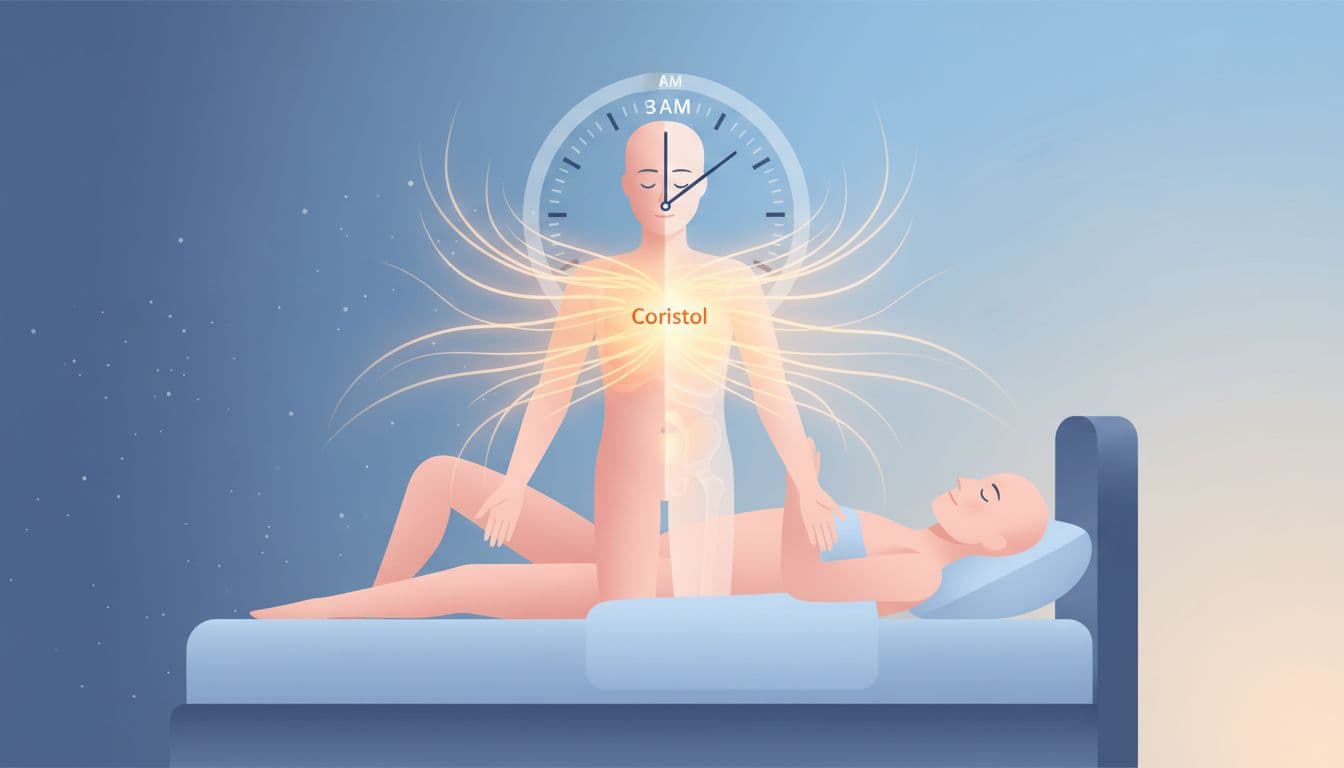
Around the early morning hours, cortisol begins to rise. Cortisol gets called the stress hormone, but it also helps you wake up and function. That rise is normal. The trouble starts when it comes too early, rises too sharply, or meets a nervous system that’s already on edge.
Poor sleep can shift that timing. So can chronic stress, aging, and irregular schedules. Some recent sleep reviews and medical summaries through 2025 and 2026 point to the same pattern: when the body clock drifts and sleep gets lighter, early waking becomes more likely. For a clearer look at that process, this guide on early cortisol rise and sleep explains why the timing matters more than the hormone itself.
Stress can keep your brain on alert, even when you’re asleep
Stress doesn’t always shout. Sometimes it whispers all night.
If you’ve been under pressure, your brain may stay slightly watchful even after you fall asleep. Sleep doctors often call this hyperarousal. In plain English, it means your system is too ready to wake up. You feel tired, yet your brain acts like it has night duty.
That can happen with work stress, grief, anxiety, depression, pain, or a habit of revving up too late in the evening. Late-night emails, intense TV, and doomscrolling can all leave the brain humming when it should be dimming. Then you wake at 3 AM, check the clock, and your mind starts sprinting. Soon, the body learns the pattern.
A medical overview of hyperarousal symptoms describes that same fight-or-flight state. It’s one reason sleep maintenance insomnia, which means trouble staying asleep, often shows up in the middle of the night.
Repeated 3 AM waking often comes from timing, stress, and lighter sleep working together, not from bad luck.
Blood sugar swings can trigger a 3 AM wake-up
Your blood sugar also shifts overnight. If it drops too low, the body may answer with alerting hormones such as adrenaline and cortisol. That response can wake you with a pounding heart, sweating, shakiness, or a sudden bolt of alertness.
Alcohol can make this worse because it may lower blood sugar later in the night while also fragmenting sleep. Big late meals heavy in refined carbs may add to the swing. In people with diabetes or prediabetes, poor glucose control can make overnight waking more likely.
You may also hear about the dawn phenomenon and the Somogyi effect. In simple terms, the dawn phenomenon is a normal early morning rise in blood sugar driven by hormones. The Somogyi effect is a rebound rise after blood sugar drops too low during the night. If that topic sounds familiar, this plain-language page on dawn phenomenon and the Somogyi effect gives a helpful overview.
Recent reviews also keep linking circadian disruption, short sleep, and shift work with worse insulin sensitivity and poorer glucose control. If you suspect blood sugar issues, bring that pattern to a clinician rather than guessing.
Small habits that can make the pattern worse
Body rhythms set the stage, but daily habits often decide how strong the pattern becomes.
Caffeine, alcohol, late meals, and screen time all matter
Caffeine lasts longer than most people think. That afternoon coffee can still echo at bedtime, especially if you’re sensitive to it. Even when it doesn’t stop you from falling asleep, it can lighten sleep later.
Alcohol is another trap. It may make you sleepy at first, but later it often breaks sleep apart. People tend to wake more, snore more, and visit the bathroom more.
Late meals can stir up reflux or keep digestion working when your body wants to power down. Screens add their own trouble. Bright light can push melatonin later, and the content itself, whether it’s work, news, or social media, can keep your brain stirred up.
Your bedroom and schedule may be training your body to wake up
A room that’s too warm, too bright, or too noisy can create the perfect 3 AM tripwire. Pets, phone vibrations, streetlights, and a partner’s snoring all matter more during lighter sleep.
Schedules matter too. If bedtime shifts all over the map, your body clock loses its rhythm. Long naps can steal sleep drive from the night. Shift work can scramble timing even more. And one small habit causes outsized trouble: clock-checking. Once you keep seeing the same hour, your brain starts to expect it.
How to stop waking at 3 AM, and when to get help
The goal isn’t to force sleep. The goal is to make wake-ups less likely, and less dramatic when they happen.
What to try for the next two weeks
Start with a short sleep diary. Write down bedtime, wake time, alcohol, caffeine, late meals, and what time you wake. Patterns show up fast on paper.
Then keep your wake time steady every day, even after a rough night. Make the room cool, dark, and quiet. Cut late caffeine. Pull back on alcohol for two weeks and see what changes. Keep dinner balanced, with protein, fiber, and not too much sugar right before bed. Give yourself a screen-free wind-down, even 30 minutes helps.
If you wake, don’t grab your phone and don’t fight the bed like it’s a contest. Keep the lights low. Try a calm mental image, such as a slow walk on a familiar path, and let your attention rest there. If you’re wide awake for a while, get up and do something dull in dim light until sleep returns. A practical guide on how to stop 3 a.m. wake-ups offers a few similar reset strategies.
Signs it’s time to talk to a doctor or sleep specialist
Get help if the pattern keeps showing up most nights for several weeks, or if you notice signs that point to something more than sleep habits. Red flags include:
Loud snoring, choking, or gasping during sleep
Strong daytime sleepiness or falling asleep at the wrong times
Night sweats, reflux, pain, or frequent bathroom trips
Mood changes, rising anxiety, or depression
Suspected blood sugar problems or diabetes
A strong tendency to get sleepy and wake unusually early, which can fit an advanced sleep phase pattern
If insomnia keeps going, ask about CBT-I, which is cognitive behavioral therapy for insomnia. It’s one of the best-studied treatments for ongoing sleep trouble.
That glowing 3 AM clock usually points to a pattern, not a curse. Lighter sleep, a rising body clock, stress, blood sugar shifts, and a few repeat habits can all line up at the same hour.
Track it, change a few inputs, and give it two weeks. If the wake-up keeps returning, or comes with warning signs, get help. Sleep is rarely random, and your body usually leaves clues.
3 AM waking, sleep cycles, circadian rhythm, insomnia, blood sugar