For centuries, mystics pointed to the pineal gland and called it the “third eye.” Modern labs, by contrast, treat it as a small hormone-making part of the brain. That contrast keeps this tiny structure in the spotlight.
If you’ve read wild claims online, the picture can get blurry fast. Some posts promise hidden vision, higher states, or instant awakening. Science says something both less dramatic and more useful: the pineal gland helps set your sleep clock, and researchers are now studying it with far better tools than before.
That matters because better sleep research can touch mood, memory, aging, and brain disease. The real story is strange enough without the fog.
What the pineal gland is, where it sits, and why people call it the third eye
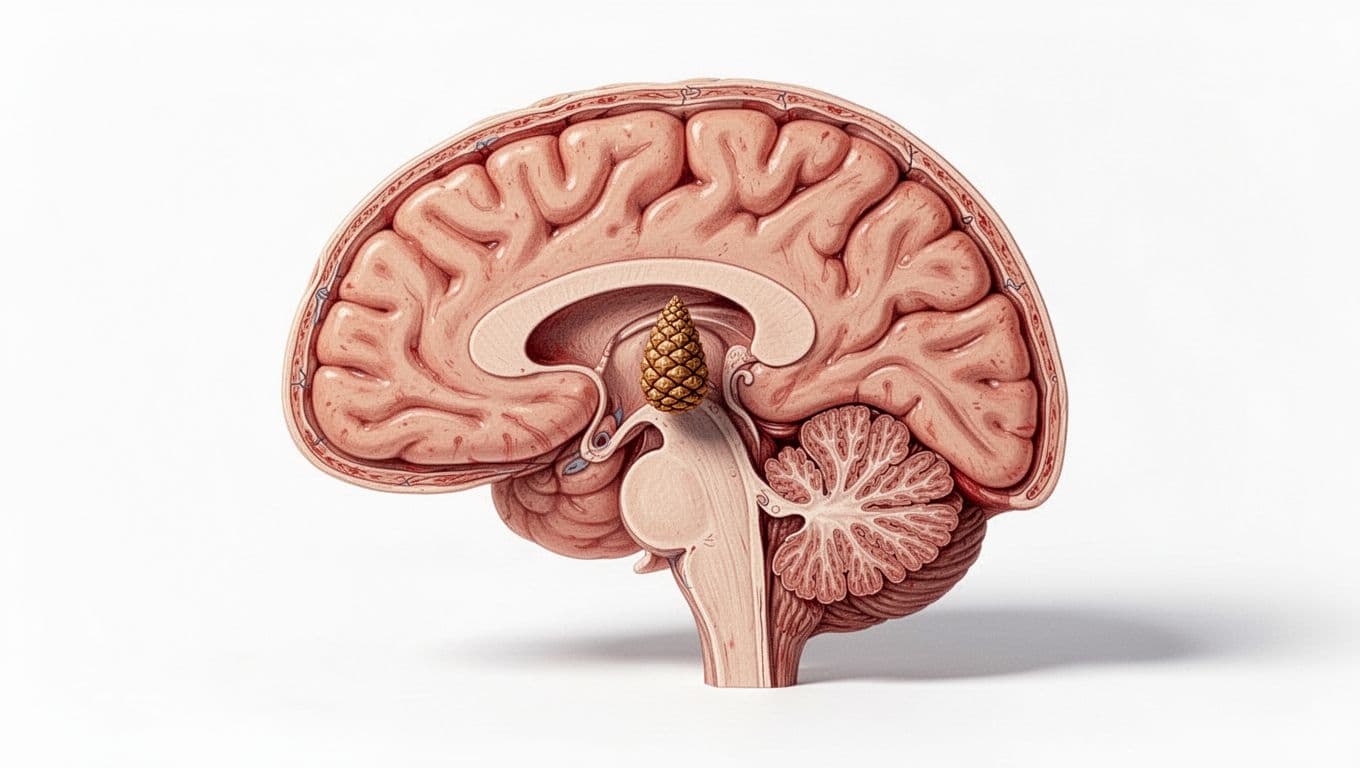
The pineal gland is small, deep in the brain, and easy to miss in everyday talk about health. Yet it has drawn attention for ages because of where it sits, near the center of the brain, and because its shape resembles a tiny pinecone. That image alone helped it gather mystery.
People call it the “third eye” for cultural and symbolic reasons, not because medicine has found an extra organ of sight. In older spiritual traditions, inner sight meant insight, awareness, or contact with the sacred. Later writers and philosophers gave the gland even more meaning, and the nickname stuck.
A tiny gland in the middle of the brain with a very real job
Biology strips away some of the mystery, but not the interest. The pineal gland makes melatonin, a hormone tied to sleep timing. When light fades, signals from the brain help the gland release more melatonin. When morning comes, that signal drops.
So the gland helps your body tell night from day. That job affects when you feel sleepy, how well you adapt to jet lag, and why bright light at midnight can throw you off. It’s a small structure, but its role reaches into daily life.
How the third eye story grew from philosophy into modern pop culture
The symbolic story has old roots. Some spiritual systems linked inner sight with wisdom or awakening. In the 1600s, Rene Descartes gave the pineal gland a famous boost when he described it as the “seat of the soul.” That idea did not hold up in science, but it stayed alive in culture.
Now the third-eye label shows up in wellness brands, social posts, guided audios, and supplement ads. Ancient symbols meet modern marketing, and the result can sound convincing. Still, symbolism is not the same as proof. The label explains the fascination, but it does not prove hidden powers.
What modern science is finally admitting, the pineal gland matters more than many people realized.
Science is not backing claims of psychic vision. It is, however, giving the pineal gland more serious attention because sleep is central to health. Poor sleep can ripple into mood, focus, immune function, and long-term brain health. Since the pineal gland helps time sleep, it matters more than many people once assumed.
As of April 2026, the strongest new interest comes from sleep biology and disease research, not mysticism.
Melatonin, circadian rhythm, and the gland’s link to sleep
The pineal gland works through the body’s circadian rhythm, your built-in daily clock. Light entering the eyes sends signals through the brain. Those signals help tell the pineal gland when to hold back melatonin and when to release it.
That rhythm shapes more than bedtime. It affects alertness in the morning, the drag you feel after crossing time zones, and the strain of shift work. It also helps explain why late-night screens can leave you tired and wired at the same time.
When the rhythm slips, daily life gets messy. Insomnia, poor sleep quality, and irregular schedules can all tangle with melatonin timing. The gland is not the whole sleep story, but it is one of the key timekeepers.
Why 2026 pineal gland organoid research is a real breakthrough
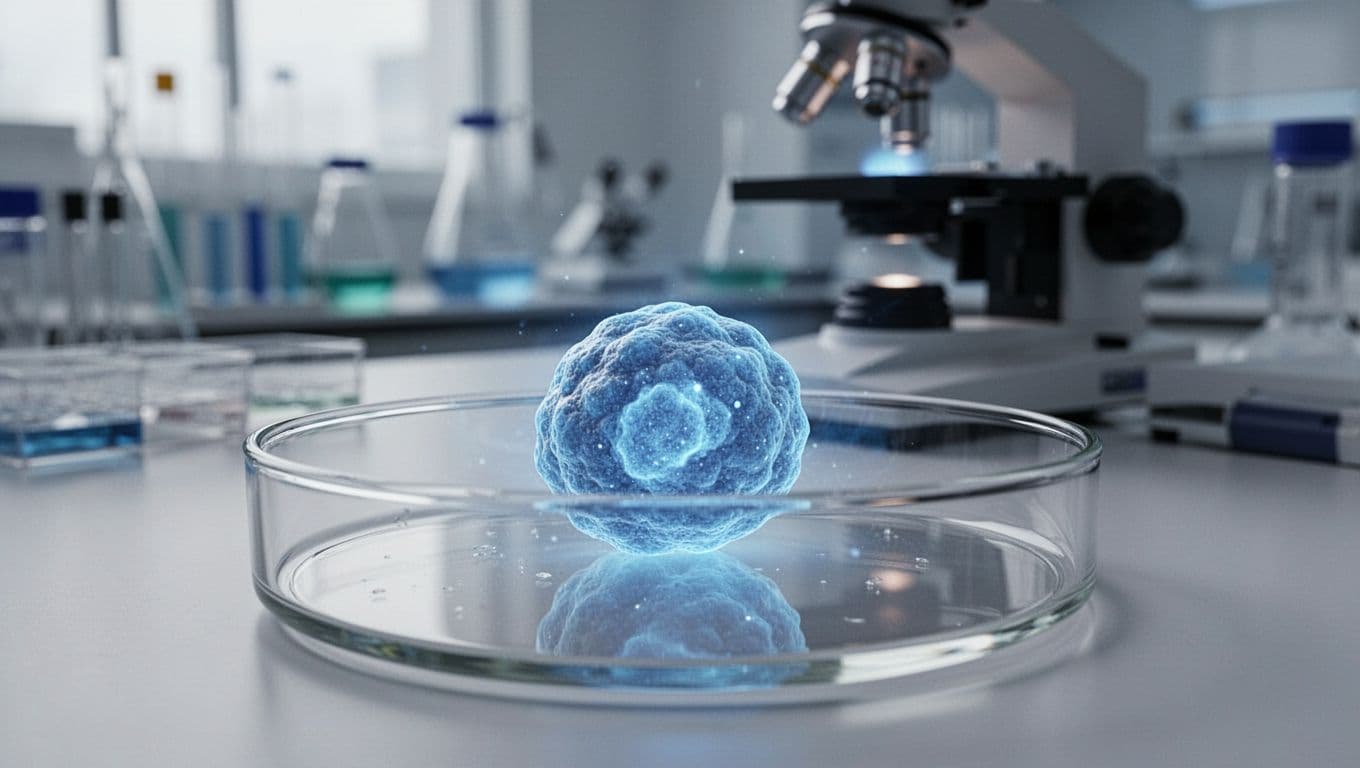
The most exciting shift in 2026 comes from Yale researchers, who created pineal gland organoids, small lab-grown versions made from human cells. These organoids produced melatonin and responded to body signals in ways that matched real pineal tissue. In mouse studies, transplanted organoids also showed functional activity.
That matters because the pineal gland is hard to study in living humans. Organoids give researchers a way to watch pineal cells more closely, test how they behave, and explore what goes wrong in disease.
The medical value is broad. Researchers are using this work to study sleep problems linked to autism, Angelman syndrome, depression, bipolar disorder, and Alzheimer’s disease. In Angelman models, for example, pineal changes may help explain severe sleep trouble. That does not mean the gland causes all of these conditions. It means the gland may offer a better window into one painful symptom many of them share: broken sleep.
Where science draws a hard line, third eye activation, DMT claims, and spiritual shortcuts
This is where evidence matters most. Online culture often takes a real gland and piles fantasy on top of it. Some claims are harmless. Others can waste money, confuse people with real sleep problems, or pull them away from medical care.
A fair reading of the evidence keeps wonder in the room while shutting the door on bad claims.
What researchers do not confirm about consciousness and DMT
As of April 2026, there are no credible scientific studies showing that the human pineal gland makes DMT in a way that explains mystical states, near-death experiences, or a hidden gateway to consciousness. The idea shows up often in books, podcasts, and viral clips, but repeated online claims are not the same as data.
Consciousness research is real and active. Still, it does not point to the pineal gland as the brain’s master control room. Human awareness seems to arise from wider brain networks, not one tiny gland tucked near the middle.
Curiosity is healthy. Turning speculation into fact is where the trouble starts.
Why decalcifying the pineal gland is still more marketing than medicine
Pineal calcification is real. As people age, calcium deposits often build up in the gland. Some studies suggest a more calcified gland may be linked with lower melatonin levels. Even so, cause and effect are not settled. Calcification may be part of aging rather than the hidden source of modern misery.
That gap in the evidence creates space for hype. Plenty of products claim to “decalcify” the pineal gland with detox plans, special frequencies, or supplements. Mainstream clinical medicine does not support those promises. There is no accepted proof that these methods remove calcification, restore lost powers, or unlock hidden perception.
A simple rule helps here: if a product promises spiritual awakening and better sleep in one neat package, slow down. Good science rarely sounds like a magic trick.
What this means for your health, your sleep, and your sense of wonder
The pineal gland matters because sleep matters. When sleep slips, mood frays, memory weakens, and focus goes dull. Over time, poor sleep can also touch long-term health in serious ways. So even if the third-eye story stays in the realm of symbol, the gland itself deserves attention.
Simple habits that support melatonin and a healthier sleep cycle
You do not need a detox ritual to support normal melatonin rhythms. Everyday habits help far more:
Get bright morning light soon after waking, because it helps anchor your body clock.
Keep evenings dimmer, especially in the last hour before bed.
Stick to a steady sleep and wake time, even on weekends when you can.
Cut late-night screen exposure when possible, or at least lower brightness.
Talk with a doctor if insomnia, shift work, or extreme daytime sleepiness keep showing up.
These steps sound plain because biology often is. Your sleep system responds to light, timing, and routine more than to mystery products.
The pineal gland is less magical than legend says, and more important than many assumed
That is the balanced takeaway. The pineal gland is not proven to open psychic sight or act as a secret doorway to the mind. Yet it is central to melatonin and sleep timing, and new organoid research may help scientists study major brain-related conditions with better precision.
A tiny gland can still be fascinating without carrying every myth people attach to it. In some ways, the real story is better. It ties wonder to evidence, which is how useful knowledge grows.
Modern science is finally giving the pineal gland closer attention, but for grounded reasons. Melatonin, circadian rhythm, and disease research explain the renewed focus far better than third-eye lore does.
That does not make human curiosity foolish. It makes careful evidence even more valuable. The pineal gland may not be a mystical lens, but it is a small, strange, and important part of how your brain keeps time.