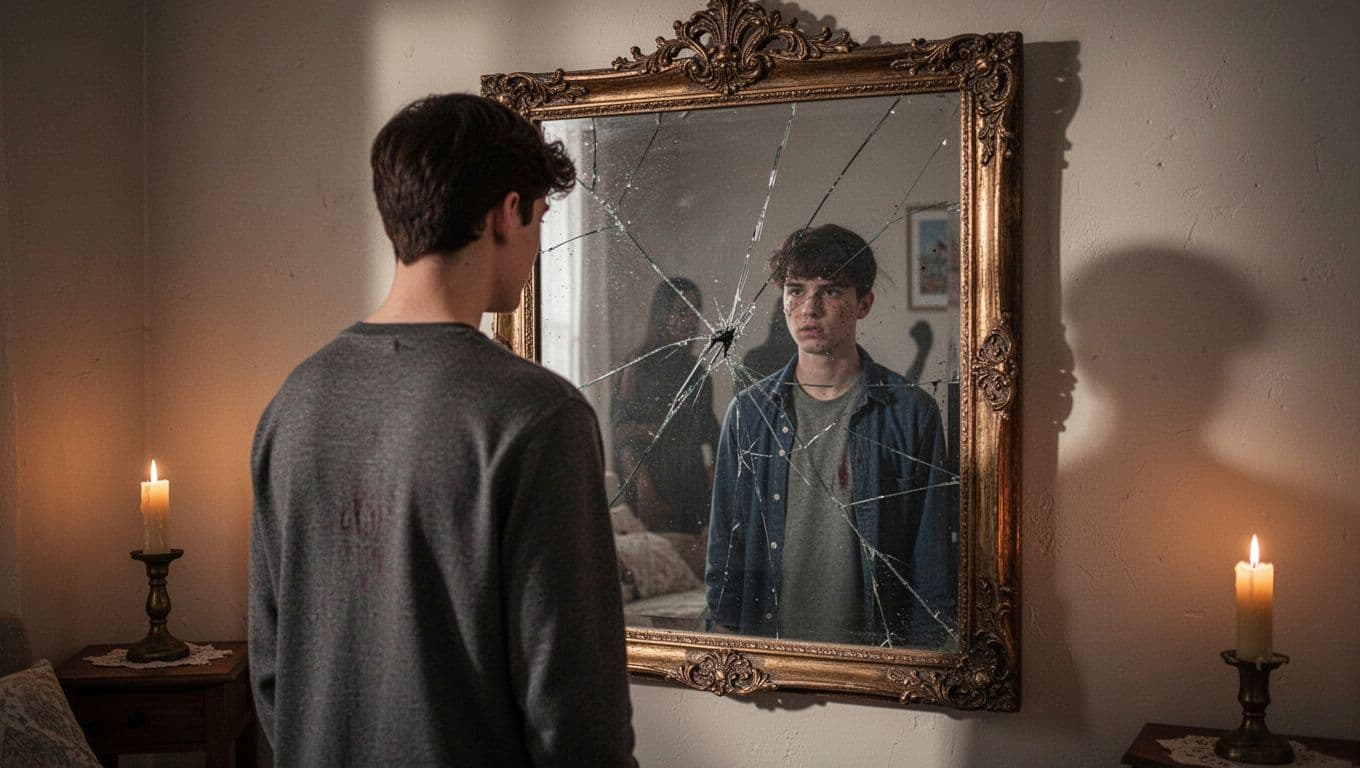
The comment usually lands after a small moment. You stop replying right away. You say no without a full speech. You leave a room feeling done, not guilty. Then someone looks at you like you’re a stranger and says, “You’ve changed.”
Maybe you have, but not in the way they mean. Often, you didn’t become cold. You became clear. You stopped calling pain love, overgiving kindness, and self-betrayal patience.
That kind of clarity can feel sharp at first. Still, it can also bring relief. The real work is learning the difference between shutting down and finally seeing straight.
Why people say you changed when you stop playing your old role.
A lot of relationships run on habit. Not honesty, habit. People get used to the version of you that says yes fast, forgives early, and stays available even when you’re tired.
So when that version fades, the whole pattern shakes. The friend who counted on your endless understanding feels distance. The partner who lived off your second chances feels tension. The family member who expected silence suddenly hears a sentence with a spine.
That doesn’t always mean they are bad people. It often means the old balance depended on you carrying more than your share. Once you stop doing that, the shift becomes visible.
Being called selfish, rude, or distant doesn’t always mean you’ve done something wrong. Sometimes it means the old script stopped working.
Your old yes may have kept the peace, but it also hid the truth
People-pleasing can look gentle from the outside. You smile, you smooth things over, you stay easy to be around. Yet under that soft surface, fear often hums like a low wire.
Maybe you feared conflict. Maybe you feared losing love. Maybe you learned that being wanted mattered more than being honest. So you kept saying yes when your body said no.
After a while, the cost adds up. You grow tired in ways sleep can’t fix. Resentment leaks into your tone. Even your kindness starts to feel heavy, because it isn’t freely given anymore.
Clarity begins when you admit that. It starts when you say, “I wasn’t always being kind. Sometimes I was being scared.” That truth can sting, but it also sets you free.
When the script breaks, other people feel the shift first.
The strange part is this, other people often notice your clarity before you trust it yourself. They feel it when you stop chasing. They hear it when you stop over-explaining. They see it when you don’t rush to fix what you didn’t break.
Because of that, their reaction can confuse you. If they’re upset, maybe you’re wrong. If they pull back, maybe you’ve gone too far. Yet discomfort isn’t proof of harm.
Think of a room where one chair has always been missing a leg. Everyone learned how to sit carefully. Then one day, you replace the chair. The room feels different, not because you caused damage, but because wobble had become normal.
What seeing clearly actually looks like in real life.
Clarity rarely arrives with music in the background. It usually comes in plain clothes. A quiet drive home. A knot in your stomach after another “small” comment. The sudden thought that you’ve been doing all the reaching for months.
In real life, seeing clearly often looks simple. You notice how often you leave certain calls feeling drained. You see that one person only shows up when they need comfort, money, or praise. At work, you catch the pattern of being praised for helping, then buried under tasks no one else wants.
This is why clarity can feel almost boring at first. It isn’t always one big reveal. More often, it’s a stack of small moments that stop making sense.
You notice patterns you used to call normal.
At first, you explain everything away. That’s how they are. They’re stressed. It’s been a hard month. You tell yourself the same story so often it starts to sound like truth.
Then one day, the pattern stands in full light. You’re always the one texting first. You’re always the one calming the storm. You’re always the one making excuses for behavior that keeps hurting you.
Chaos can disguise itself as love. Familiar pain can wear the face of loyalty. Yet once you see the loop, it’s hard to unsee it.
That is often how self-awareness grows, quietly, then all at once. What used to seem normal starts to feel expensive.
You stop arguing with your own gut.
Your gut isn’t magic. It’s your mind and body noticing what your hope tried to cover. It picks up tone, timing, broken promises, and the look on your face after yet another letdown.
So when words and actions don’t match, your body often knows first. Your chest tightens. Your sleep gets thin. You rehearse conversations in the shower because something feels off, even if you can’t name it yet.
Seeing clearly means you stop cross-examining yourself every time you feel uneasy. You still stay fair. You still look at facts. But you no longer demand that your pain become courtroom proof before you believe it.
In 2026, a lot of people talk about emotional fitness in this same way. Small check-ins, short journal notes, and honest pauses help people trust what they feel instead of bulldozing past it. Clarity grows in those small moments.
The hard part, clarity can bring grief before it brings peace.
People talk about awakening like it feels bright. Sometimes it doesn’t. Sometimes it feels like standing in a room after the party ended, seeing the cups, the stains, the mess, and knowing you can’t pretend it was beautiful anymore.
That’s because clarity takes things from you. It takes fantasy. It takes false hope. It takes the old role that once gave you a sense of purpose, even while it drained you. You may feel lighter and sadder at the same time.
Both feelings belong.
You grieve the person, the story, and the future you pictured.
When you see clearly, you don’t only lose what was. You also lose what you kept hoping it would become. That is why the grief can feel so deep.
Maybe you finally admit a parent won’t become safe. Maybe you accept that a partner loves you, but not in a way that protects your heart. Maybe you face the fact that a friendship was built on your listening ear, not mutual care.
That hurts because hope has weight. We carry imagined futures like folded letters in a pocket. A better apology. A changed pattern. A softer ending. When those futures die, something in you mourns.
Grief here isn’t weakness. It’s the cost of seeing the truth without makeup.
Peace can feel lonely at first because chaos used to feel familiar.
Calm can feel strange when you’ve lived on mixed signals. If your nervous system is used to waiting, fixing, and decoding, peace may seem empty before it seems safe.
You might miss the intensity. Not because it was good, but because it was known. The mind often reaches for familiar pain before it trusts unfamiliar peace.
So the early stage of clarity can feel like withdrawal. The phone stays quiet. The drama drops. The overthinking has less to feed on. Suddenly, your life has more space, and space can echo.
Still, that empty feeling doesn’t mean you made the wrong choice. It often means your body is learning a new rhythm, one where love doesn’t have to hurt to feel real.
How to honor your clarity without turning it into a wall.
Clarity needs care, not armor. If you turn every lesson into a locked door, pain still wins. The goal isn’t to harden. It’s to stay awake.
That means choosing simple actions over dramatic ones. It also means letting trust move at the pace of proof. You don’t need a grand speech each time you protect your peace. Often, the clearest move is the quiet one.
Let your boundaries be simple, not loud.
A boundary doesn’t need fireworks. It can sound like, “I can’t do that.” It can look like replying tomorrow instead of now. It can mean leaving after one rude comment, not staying for five more.
Many people are practicing this through tiny habits now, because small acts stick. One clear no a day. One honest pause before agreeing. One step back from a draining pattern. These are not small in effect, only in volume.
Quiet boundaries often work best because they don’t ask for permission. They don’t beg to be understood. They simply change your access.
Keep your heart open, but stop handing out blind trust.
There’s a difference between cynicism and discernment. Cynicism says everyone will hurt you. Discernment says people reveal themselves over time.
That shift matters. Seeing clearly doesn’t mean assuming the worst in every room. It means you stop building castles out of hints. You let actions count more than promises. You watch for steadiness, not charm.
An open heart still needs a front door. It doesn’t need to stay bolted forever, but it should not swing wide for anyone who knocks. Trust grows best when it has evidence, time, and calm.
If people call that guarded, let them. You’re not hiding. You’re paying attention.
You didn’t become hard to love. You became harder to use. There’s a difference, and your nervous system knows it.
What changed is not your heart. It’s your willingness to abandon yourself to keep others comfortable. Seeing clearly can feel lonely, sharp, and even sad before it feels steady. Still, it is not cruelty. It is self-respect with the lights on.
So if someone says you’ve changed, pause before you defend yourself. Maybe you didn’t lose your softness. Maybe you finally stopped giving it to what keeps breaking it.